Showing posts with label Source Text. Show all posts

Saturday, February 15, 2025

Helen Keller and Anne Sullivan

     Helen Keller was born on June 27, 1880, in Tuscumbia, Alabama. As a young child, she was healthy but lost her sight and hearing. This unfortunate event left her feeling isolated and alone, struggling to communicate. When Helen was six years old, her parents hired a teacher named Anne Sullivan. Anne played a crucial role in teaching Helen how to communicate effectively. Through patience and determination, Helen learned to read and write in Braille and became an accomplished scholar. Helen Keller went on to attend college, becoming the first deaf-blind person to earn a degree. She dedicated her life to advocating for people with disabilities. Her remarkable story inspires many to overcome challenges and pursue their dreams.


    Anne Sullivan was born on April 14, 1866, in Feeding Hills, Massachusetts. She faced many challenges in her early life, including poor eyesight. After overcoming these difficulties, Anne became determined to help others. At the age of 20, Anne was hired to teach Helen Keller, who was deaf and blind. She used innovative techniques to help Helen communicate and learn. Through perseverance and creativity, Anne taught Helen to read, write, and eventually speak. Anne Sullivan’s work with Helen changed the course of both their lives. Together, they traveled the world, advocating for people with disabilities. Anne's dedication and passion for teaching inspired countless others and left a lasting legacy.

    Helen Keller and Anne Sullivan worked together to advocate for people with disabilities. Their partnership changed the lives of many individuals facing similar challenges. They traveled across the country, sharing their message of hope and empowerment. Together, they spoke to large audiences about the rights of people with disabilities. They fought for education and better opportunities for those who were deaf and blind. Helen’s incredible story, alongside Anne’s guidance, inspired many to push past barriers. Their efforts continue to influence the disability rights movement today. They showed the world the strength and potential of every individual. The obstacles, our teachers and friends, and our life circumstances help to shape us. It is what we do with both good and bad, that determine our fate. We never know what God has in store for us when we meet a new person, face a problem, or even when we have a disability.

Sunday, February 9, 2025

Health Fads


Health Fads 

Health fads in the late 1800s were often influenced by new ideas about medicine and nutrition, but some of them were a bit unusual! During this time, many people believed in the benefits of fresh air and outdoor exercise, which led to activities like walking and cycling becoming quite popular. However, one funny health fad was the idea of "lightweight walking," where people would wear very heavy wooden shoes to strengthen their legs! This odd practice seemed more confusing than beneficial, but many thought it was the secret to stronger muscles. Additionally, some health enthusiasts pushed vegetarian diets, claiming that fruits and vegetables were the ultimate key to health. Meanwhile, others experimented with "hydropathy," using bizarre water treatments to heal ailments, including ice-cold baths during winter! While some ideas were strange, they helped spark a growing interest in personal wellness and led to a foundation for future health trends.

As we moved into the early 1900s, health fads began to focus more on diet and nutrition, but there were still some amusing ideas! Many people experimented with "scientific" diets that promised quick weight loss, but one rather funny fad was the "Grapefruit Diet," where individuals believed eating nothing but grapefruit could lead to weight loss. Some people even claimed it had magical weight-loss powers, leading to countless recipes featuring grapefruit. Along with quirky diets, there was a greater emphasis on diets rich in whole grain products that promoted healthier eating. This era also introduced the idea of taking vitamin supplements. This led to people mixing their own concoctions in the hopes of improving their health. While some of these practices were based on new understandings of nutrition, the Grapefruit Diet gave everyone a good laugh.  As strange as many of these health fads were,  they at least helped people focus more on their well-being.

In the second half of the 1900s, health fads became more exciting and even sillier! With an increase in awareness about processed foods, people started pursuing low-fat and low-sugar diets, but one funny trend that emerged was "cabbage soup diets." Many believed that eating just cabbage soup could help them shed pounds quickly. This led to countless recipes and dramatic claims. At the same time, physical fitness gained popularity, with people participating in aerobics classes and jogging.  The truth is, many people tried sticking to their cabbage-only soup diets while taking part in energetic workout sessions, leading to some hilarious meal planning and workout routines! Lastly, health-conscious fast-food options and organic products became popular during this time. The result was  healthier choices for consumers. The amusing cabbage soup fad definitely contrasted with the serious approach to fitness and health.  It  just proves that even when it comes to wellness, there’s always room for a good chuckle.


American Football (Not to be Confused with Soccer)!

 American Football (Not to be Confused with Soccer)!

Football can refer to different sports depending on where you are in the world. In Europe the word refers to soccer. In America, football is quite different. American football has a rich history that dates back to the late 1800s. The sport evolved from two popular games of that time: rugby and soccer. In its early days, football was played with very few rules, and the gameplay was quite chaotic. In 1869, the first official game was played between two colleges, Rutgers and Princeton, which used a round ball and allowed players to use their hands. Over the years, the game began to take shape, and new rules were introduced to make it safer and more organized. By 1880, Walter Camp, often called the "Father of American Football," started creating a set of rules that formed the basis of the game we know today. The first college football championship was held in 1869, and since then, football has grown to become one of America’s favorite sports.

There are many fun facts about American football that fans love to share! For instance, the Super Bowl, which is the championship game of the National Football League (NFL), is one of the most-watched sporting events in the world. On game day, millions of people gather to watch the exciting match and celebrate with friends and family. Another interesting tidbit is that each NFL team has a mascot that entertains the crowd during games. Swoop, the Philadelphia Eagles mascot, has several great qualities that fans love! One of the most notable things about Swoop is his positive energy. Additionally, the positions in football each have specific roles, and the quarterback is often considered the leader of the team, responsible for throwing the ball and calling plays. With its thrilling plays and team spirit, American football brings people together for fun and excitement every season! 


Monday, July 22, 2024

Cursive


    Like many millenia-old practices, the invention of cursive writing was more of a collective effort than something we can attribute to one person. It goes as far back as the Roman Empire, after written language first developed. Square capitals were used on inscriptions or buildings and monuments (some of which are still standing), but cursive (or script) was used for daily writing.

    Later, in the eighth century, monks created the Carolingian script — the earliest form of standardized cursive that others built upon. This script evolved during medieval times, and its twists and curls became harder to read before the Renaissance revived the Carolingian way. The earliest form of cursive you probably recognize is called Copperplate. Calligrapher Timothy Matlack penned Thomas Jefferson’s words on the original copy of the Declaration of Independence using the Copperplate script.

    While beautiful, this fancy calligraphy wasn’t practical for everyday writing, so a teacher named Platt Rogers Spencer developed a new form of penmanship around the mid-1800s. He came up with the name “chirythmography,” from the Greek words for “timed handwriting.” He used a metronome for writers to keep pace with his elliptical letters, which he claimed were inspired by nature. The “Spencerian” method was taught in schools for the latter half of the 19th century.

    Quick-working clerks and telegraph operators translating Morse code into script found the Spencer cursive still too time consuming, though. Enter: Austin Palmer and the Palmer Method. Palmer’s idea was to make cursive writing more practical and lose the fancy flourishes from the Renaissance days. This form of script was very popular in the early 20th century and can probably be seen in old letters from your great- and great-great-grandparents.

    From there, penmanship started to become big business. It was taught in grade schools, and adults entering the business world got a leg up if they completed a course in a penmanship school. The Zanerian College of Penmanship became the Zaner-Bloser Company, selling handwriting instruction material to schools. (Fun fact: Zaner-Bloser, Inc., still publishes Highlights for Children magazine.) The Zaner-Bloser cursive and the later D’Nealian cursive are the simple scripts that were taught in grade school during the second half of the 20th century. While many school districts dropped cursive curriculum in the 2010s, it recently began regaining a foothold across the United States. In 2024, California became the 22nd state to require teaching cursive handwriting in its schools. 

----------------------------------------------------------------------------------------------
----------------------------------------------------------------------------------------------

 P1   (7)

Like many millenia-old practices, the invention of cursive writing was a collective effort.

Its invention is not something that can be attributed to one person. 

Cursive writing goes as far back as the Roman Empire in the 5th century.

It appeared after written language first developed. 

Cursive, also known as script, was used for daily writing.

At the same time, square capitals were used on inscriptions or buildings and monuments. 

Some of these still standing. 


P2  (11)

Later, in the eighth century, monks created the Carolingian script.

This is the earliest form of standardized cursive upon which the others are built. 

This Carolingian Script  evolved during medieval times.  


The earliest form of cursive familiar to most people is called Copperplate. 

Calligrapher Timothy Matlack penned Thomas Jefferson’s words on the original copy of the Declaration of Independence using the Copperplate script. ↓ 


Although beautiful, this fancy calligraphy wasn’t practical for everyday writing.

A teacher named Platt Rogers Spencer developed a new form of penmanship around the mid-1800s. 

He came up with the name “chirythmography,” from the Greek words for “timed handwriting.” 

He used a metronome for writers to keep pace with his elliptical letters.

Spencer felt the script was inspired by nature. 

This “Spencerian” method was taught in schools for the latter half of the 19th century.


P3  (19)

Cursive is a faster form of writing than printing and was used by clerks and telegraph operators.

Telegraph operators translated Morse code into script,

Quick-working clerks and telegraph operators found the Spencer cursive still too time consuming. 

Enter: Austin Palmer and the Palmer method! 

Palmer’s idea was to make cursive writing more practical.

The first step was to lose the fancy flourishes from the Renaissance days. 

The Palmer method script was very popular in the early 20th century.

It can probably be seen in old letters from your great- and great-great-grandparents.


Penmanship started to become big business. 

It was taught in grade schools. 

Adults entering the business world were more esteemed if they completed a course in a penmanship school. 

The Zanerian College of Penmanship, which later became the Zaner-Bloser Company, sold handwriting instruction material to schools. 

The company was very successful.

Fun fact: Zaner-Bloser, Inc., still publishes Highlights for Children magazine. 

The Zaner-Bloser cursive, one of the simple scripts, was taught in grade school during the second half of the 20th century.


The other simple cursive script taught in schools at that time was D’Nealian cursive.


Many school districts dropped cursive curriculum in the 2010s. 

Recently has begun regaining a foothold across the United States. 

In 2024, California became the 22nd state to require teaching cursive handwriting in its schools. 


https://wordsmarts.com/history-cursive-writing/


Thursday, April 4, 2024

Mysteries of the Vernacular:Robot

https://www.youtube.com/watch?v=zXnlMckRiyE


Thursday, February 29, 2024

Spitting to Survive (Source Text)

 Spitting to Survive
 by Liana Mahoney

    Spit keeps our mouths moist and softens our food when we chew. Without spit in our mouths, we would have a hard time talking. We would find it even harder to swallow. But for some animals, spit works better after it has left the mouth. Some animals are experts at surviving because they are expert spitters.  (5)

    Llamas are animals often found in petting zoos and farms. These animals seem to like their personal space. A llama that feels threatened or annoyed will spit slimy gobs at you to get you to leave it alone. Sometimes llamas even spit on each other to steal food! This trick usually works, because llama spit includes food from the llama’s stomach, and it can be quite smelly. When a llama spits on another animal, the animal usually loses its appetite and walks away, leaving its food behind. (6)

    The archerfish is a very skilled spitter. This fish is like a submarine with a loaded weapon. It takes aim and spits jets of water at insects and other small creatures to knock them into the water. Then it gulps them down quickly. To create such a forceful stream of water, an archerfish closes its gills, and uses its tongue to form a tube in its mouth. Then the fish sticks its snout out of the water and aims. Aim! Launch! Lunch! (~7)

    Spitting cobras are also known for their expert aim. These snakes spray poisonous venom from their fangs to protect themselves. Scientists believe that these snakes actually aim for the eyes! When the cobra’s venom gets into the eyes of an animal, the venom causes terrible pain, and even blindness. This gives the snake plenty of time to get away. (5)

    Spitting is considered to be rude behavior in people. But for some animals, spitting can be a smart way to get lunch – or a clever way to avoid becoming lunch!  (2)

Saturday, January 13, 2024

Mermaid Tears Legend (Source Text)

    Long ago, on a dark and stormy night, a Schooner was out on a raging sea.  The vessel was being tossed about in the violent waters of the ocean by a terrible storm.  Swimming alongside the Schooner was a beautiful mermaid. She had fallen in love with the ship's Captain and was very worried about his safety. The mermaid had the power to change the course of nature and calm the violently blowing winds. It was in her nature to be able to still the waves.

    Her dilemma was that she was forbidden to do this by Neptune, the god of the sea. He was a mighty and intimidating god. Although she was frightened of what he might do if she disobeyed, she used her power to stilled the sea and calm the winds. The Schooner and the Captain she loved so dearly were able to make it to safety to shore.

    Because of this disobedient act, Neptune, sentenced her to a life of solitude in the ocean. She was never  allowed to be near her beloved Captain again. To this day she weeps in her loneliness, and her "Mermaid tears" still wash up on beaches everywhere.


Friday, December 15, 2023

Eli Whitney (part 1)

 NAME:                                                                      There are 2 parts to this assignment

                                                                                                         Part A & Part B


Assignment PART A:

  1. Read the essay on Eli Whitney and the cotton gin.

  2. Answer the comprehension questions. Be sure to answer with complete sentences.

  3. Indicate


Usually we indicate ONE example of every required stylistic requirement.

 In THIS assignment you are to indicate more than one example of each required stylistic requirement. 


See the checklist at the bottom to find out how many of each stylistic requirements should be indicated.


  1. Fill out the checklist to reference (and double check) your indications.


Eli Whitney

by Charles Bird King

edited by Soutenus
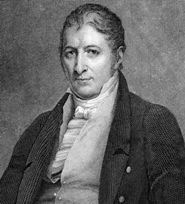

Eli Whitney, the ingenious inventor of the cotton gin, was born on December 8, 1765 in Westborough, Massachusetts. His parents, Eli and Elizabeth Whitney had four children and Eli was their oldest. While growing up on the farm with his two brothers and one sister, Eli enjoyed working in his dad's workshop.

Young Eli was more interested in tools and machines than farming. As a child, he showed enormous artistic, practical, technical talent.  At only 12 years old he built a fiddle in his father's workshop.  After that, the local musicians would bring their instruments to Eli for repairs. Because he enjoyed challenges, he often spent his time taking things apart, tinkering with them, and putting them back together. He wanted to discover the answers to all the whys and hows.  One day, Eli took apart his father's valuable watch to figure out how such a wondrous thing worked. Then he realized he would have to put it back together or he would be in huge trouble.  He carefully reassembled the small pieces remembering exactly how everything fit back together. Luckily for Eli, the watch worked perfectly.

After high school, Whitney attended Yale College. There he studied a variety of subjects including mathematics, Greek, Latin, and philosophy. Upon graduating in 1792, he hoped to study law, but was short on money so he accepted a job as a tutor in Georgia.

While traveling to Georgia, Whitney met a lady named Mrs. Greene. Mrs. Greene was the widow of the Revolutionary War hero General Nathaniel Greene. She owned a large plantation called Mulberry Grove in Georgia. The two became close friends. In fact Whitney decided to turn down his tutoring job and ended up staying at Mulberry Grove. Disappointed but resolved, Eli turned down the job because he had been misled about the salary. This decision changed his life.

While at Mulberry Grove, Whitney learned about the production of cotton. He discovered that most plantations could only grow a type of cotton called "short staple" cotton. However, short staple cotton was extremely difficult and expensive to clean.  Many plantation owners in the South had stopped growing cotton because it was  simply not cost effective. The seeds had to be removed by hand which was slow and tedious. It could even be painful.  Cotton “bolls,” which are the rounded mature fruit of the cotton plant, are sharp and pointy. Building something to help clean the seeds from the cotton with greater efficiency was the perfect challenge for Eli. Whitney enjoyed building machines. Even more than that, he loved solving problems. 

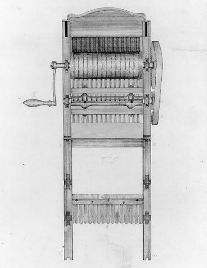
That winter, Eli invented a machine he called the cotton gin. The "gin" in cotton gin is a shortened version of the word "engine." Using a wire screen in combination with small hooks, the cotton gin pulled the cotton fibers through the tightly crisscrossed mesh. Eli Whitney’s new machine could clean more cotton in a few hours than a group of workers could in a day. The cotton gin was like a miracle to the people of the late eighteenth century. It certainly revolutionized the cotton industry of America.

With the help of his business partners, Whitney obtained a patent for his new invention and made plans to make his fortune. However, things didn't work out for him.  Motivated by greed, competitors simply copied his new machine while Whitney was unable to stop them. At first he fought them in court although he eventually ran out of money.

Although Whitney did not become rich, many plantation owners in the South did. Because the patent failed to stop others from copying his idea, Whitney did not reap any financial benefits. On the other hand, plantation owners who used cotton gins were able to make a lot of money by growing, harvesting, and selling cotton.  Using the cotton gin made a huge difference in these plantation owners’ lives.  Unfortunately, this had the unintended consequence that more enslaved people were needed to pick cotton from the fields. Over the next several years, the enslaved became even more important and valuable to plantation owners. Sighting this rise in demand for enslaved workers, historians make a compelling argument for a more positive ramification of the cotton gin. Some historians point to the cotton gin's impact on slavery as an eventual cause to the Civil War.

Although the cotton gin did not make Whitney rich, he did become famous. Undeterred, Eli Whitney used this fame to advance his particular idea of interchangeable parts for manufacturing. Securing a contract from the government to produce muskets led to a transformation in the way the weapon was manufactured. Whitney did not actually invent the idea of using interchangeable or standardized parts. However, Whitney was one of the first to carry out and perfect  "the interchangeable system" of manufacturing. This important contribution put him at the forefront of the growth of American industry. Eli Whitney’s  innovations made a significant impact on the world. Who knows how much more he would have contributed had he not died at the relatively young age of 60. Eli Whitney died on January 9, 1825 of cancer.


How well did you understand? COMPREHENSION QUESTIONS


1) Where did Eli Whitney grow up?


2) Which sentence is the best synopsis?


a) Eli Whitney changed the course of history in the southern United States with the invention of the cotton gin. 


b) Eli Whitney was born in the 1700s


c) Eli Whitney repaired instruments as a child.


d) Eli Whitney is remembered as the Father of Invention.


3) What kind of cotton was difficult to clean?

4) What does the word “gin” mean in “cotton gin”?


5) What problem did Whitney encounter associated with patents?


6) What was an unintended negative consequence of this invention?


7) What timeline influence did it have according to some historians?


8) Did Whitney become rich because of his ingenious patent?


9) What is a cotton “boll”?


10) How old was Eli Whitney when he died?

—----------------------------------------------------------------------------------------------------------------



Checklist Requirements Specific to THIS Assignment


w/ws   

Find 3, label in original essay, and record them here: 


lys  

Find 4, label in original essay,  and record them here: 

Note: the adverb must modify a verb to count.


asias

Find 3, label in original essay,  and record them here:


bcs

Find 2, label in original essay,  and record them here:


QAs

Find 12, do NOT label in original essay. Simply record them here:


SVs

Find 11, do NOT label in original essay. Simply record them here:


(S)s

Find 2, label in original essay, and record them here:


(1)s

Find 2, label in original essay, and record them here:


(2)s

Find 8, label in original essay, and record them here:.


(3)s

Find 1, label in original essay, and record here:


(4)s

Find 2, label in original essay, and record them here:


(5)s

Find 6, label in original essay, and record them here:


(6)s

Find 3, label in original essay, and record them here:


(7)s

Find 2, label in original essay,  and record them here:


(8)s

Find 1 (8) and find 1 (article +8), label in original essay, and record them here:


DECs

Find 3, label in original essay, and record them here:


M3s

Find 3, label in original essay,  and record them here:


OWL

Find 1, label it in the original essay,  and record them here:


TT/CC - What type of TT/CC was used?

—----------------------------------------------------------------------------------------------------------------


Thursday, December 7, 2023

Christmas Carols


If you have ever wondered when Christmas carols first came about, the answer lies in the 14th century. Their evolution dates back even further. Even before the birth of Christ, it is believed that people sang midwinter songs to keep spirits up.


Christianity spread across Europe from the fourth to the 14th centuries, and the first carols were produced by Franciscan friars (pictured here in the 1940s), who were followers of Saint Francis of Assisi. These took the form of a dance in a circle with linked hands and everybody singing the song. Huge numbers of Christmas carols survive from the 15th century, making it the best-preserved aspect of English medieval music.

Professor Ronald Hutton believes that the dances associated with early carols died out as ‘people just got bored with it’. For a period, carols could be attached to any season, so there were May carols and harvest carols. But Hutton says that, as Christmas is the time for festivity, Christmas carols survived where carols linked to other parts of the year died out. 

England’s oldest surviving carol, says Hutton, depends on how you define it. ‘If you go for the component parts, I think it’s “While Shepherds Watched Their Flocks By Night”, which has a 16th-century tune and 17th-century words. On the other hand, they’re not put together securely until the 19th century. So if you’re going for the oldest carol that’s still popular, which is complete, it’s probably “O Come All Ye Faithful”, both the tune and the words of which seem to be securely put together by the end of the 18th century.’