Saturday, March 26, 2022

(7)s

(7) OPENER DESCRIPTION 

(7) is an "ed OPENER." That means the first word should be an adjective that ends in "ed."

There’s one simple and clear rule for adjectives that end in –ed. This ending is only used when you are describing a feeling or emotion.

Think of how a person, an animal, or personified thing feels. The "ed word" is that descriptive word.

Do not start with a past tense verb.
__________________________________________________________________________

(7) OPENER "HOW TO"

•  (7)s start with a dependent clause or phrase followed by a comma.
•  Whoever or whatever is FEELING the "ed word" should be named immediately after the comma.
•  What comes after the comma should be an independent clause -- that means it should be able to stand alone as a sentence on its own.
•  Both parts of the sentence must be happening at the same time.

EXAMPLES:
(7)Worried about her grades, Hermione studied with laser focus.
(7)Unsettled by the howling wolves in the distance, the baby lamb nestled closer to its mother.

LET'S BREAK IT DOWN:
Start with a dependent clause or phrase followed by a comma.
Worried about her grades,

Whoever or whatever is FEELING the "ed word" should be named immediately after the comma.
Hermione

What comes after the comma should be an independent clause -- that means it should be able to stand alone as a sentence on its own.
Hermione studied with laser focus.

Both parts of the sentence must be happening at the same time.
Hermione is worried . . . and, at the same time . . . . she studied with laser focus
__________________________________________________________________________

 (7) or "ed word" partial LIST:

  • Alarmed 
  • Aggravated 
  • Amused
  • Angered
  • Annoyed
  • Astonished 
  • Astounded 
  • Befuddled
  • Bewitched
  • Bored 
  • Captivated 
  • Challenged 
  • Charmed 
  • Chilled
  • Comforted 
  • Confused 
  • Convinced 
  • Depressed 
  • Disappointed 
  • Discouraged 
  • Disgusted 
  • Distressed 
  • Disturbed 
  • Elated
  • Embarrassed 
  • Encouraged 
  • Entertained 
  • Excited 
  • Exhausted 
  • Fascinated 
  • Frightened 
  • Frustrated 
  • Fulfilled 
  • Gratified 
  • Inspired 
  • Insulted 
  • Interested 
  • Moved 
  • Overjoyed
  • Overwhelmed 
  • Perplexed 
  • Pleased 
  • Relaxed 
  • Relieved 
  • Saddened
  • Satisfied 
  • Shocked 
  • Sickened 
  • Soothed 
  • Surprised 
  • Tempted 
  • Terrified 
  • Threatened 
  • Thrilled 
  • Tired 
  • Touched 
  • Troubled 
  • Unsettled 
  • Worried 


VARSITY INFO:
Yes, it is possible to create a (7) with a past tense verb.
EXAMPLE:  (7-v) Nestled under the blankets, we slept soundly all night.

BUT! For us, a (7) opener is as much about understanding what part of speech you are using as 
it is about the correct syntax.

(7) opener should typically be created with an adjective as your "ed" word.

The exception to the rule:
IF you use a past tense verb as your (7), you must indicate it properly(7-v). That shows me that you understand the part of speech and what you have created. 
AND
It must not sound like Yoda . . . . .  (7-v)Walked we did, to the store. 
Even if it is indicated correctly, it will be counted as incorrect. No  Yoda-speak  (aka: Yodish)!


Note: worksheet and teacher's notes in Google doc form and E3 Teacher Resource Website


Tuesday, March 22, 2022

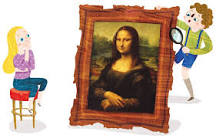
The Mona Lisa (Source Videos & Source Text)

The Mona Lisa 
Great Art Explained


The Mona Lisa TEDed

Image result for facts about the mona lisa

Indicate 1 of every DRESS UP

Indicate 1 of every OPENER

Indicate 1 DEC

Indicate 1 M3

Make sure you have TT/CC

NO banned words, contractions, dialogue

Double Space!


Just in case you have trouble with Abstract Noun OPENERs, I have included a list of (8)s that could be worked into your essay — You may choose one and make an (8) sentence.

Beauty  

(8) Beauty might be the first word that pops into one’s mind when describing the Mona Lisa.

Mystery 

(8) Mystery surrounds one of the greatest pieces of art of all times.

Intrigue

(8) Intrigue and fascination might be part of the reason that the Mona Lisa is such a beloved piece of art.

Confusion

(8) Confusion reigned when the Mona Lisa was discovered to be missing. 


TEXT SOURCE 

https://explorethearchive.com/mona-lisa-facts


PLUS

  • It may be unfinished. ...

  • It was once believed to be a self-portrait. ...

  • It once hung in Napoleon's bedroom. ...

  • It was stolen in 1911. ...

  • Pablo Picasso was one of the suspects in the theft. ...

  • It has been attacked multiple times. ...

  • It was brought to America at the request of Jackie Kennedy.

  • For such a famous painting, it is surprisingly small; it measures just 30 inches by 21 inches

  • Mona Lisa has no eyebrows because it was the fashion in the Renaissance to shave them. Women shaved their facial hair, including their eyebrows, then.  Ahhhh! But . . . . In October 2007, Pascal Cotte, a French engineer and inventor, says he discovered with a high-definition camera that Leonardo da Vinci originally did paint eyebrows and eyelashes.

  • Leonardo was an Italian, but he sold the painting to the king of France. 

  • Today, it is in the Louvre Museum in Paris.

  • The Mona Lisa is protected by a bullet-proof glass, which has only been replaced once.

Wednesday, March 2, 2022

The Landlord's Mistake

STEP 1) Rewrite this story with no dialogue,* no banned words, and A LOT more description. 

Add details that you think might enhance the story (example: what approximate year is this?)

Think of this as a collaborative essay with the original author. You MAY use the author's words. But you must IMPROVE the story.    

* You MAY keep this line of dialogue, "A farmer is as good as any other man; and where there's no room for a farmer, there can be no room for me."

STEP 2) Stylistic techniques:

1 of each DU
1 of each OPENER
1 M3
I DEC
1 OWL (totally optional)

STEP 3) Check your formatting and make sure you have a correct Title Block, checklist, etc. 


When John Adams was president and Thomas Jefferson was vice president of the United States, there was not a railroad in all the world.

People did not travel very much. There were no broad, smooth highways as there are now. The roads were crooked and muddy and rough.

If a man was obliged to go from one city to another, he often rode on horseback. Instead of a trunk for his clothing, he carried a pair of saddlebags. Instead of sitting at his ease in a parlor car, he went jolting along through mud and mire, exposed to wind and weather.

One day some men were sitting by the door of a hotel in Baltimore. As they looked down the street they saw a horseman coming. He was riding very slowly, and both he and his horse were bespattered with mud.

"There comes old Farmer Mossback," said one of the men, laughing. "He's just in from the backwoods."

"He seems to have had a hard time of it," said another; "I wonder where he'll put up for the night."

"Oh, any kind of a place will suit him," answered the landlord. "He's one of those country fellows who can sleep in the haymow and eat with the horses."

The traveler was soon at the door. He was dressed plainly, and, with his reddish-brown hair and mud-bespattered face, looked like a hard- working countryman just in from the backwoods.

"Have you a room here for me?" he asked the landlord.

Now the landlord prided himself upon keeping a first-class hotel, and he feared that his guests would not like the rough-looking traveler. So he answered: "No, sir. Every room is full. The only place I could put you would be in the barn."

"Well, then," answered the stranger, "I will see what they can do for me at the Planters' Tavern, round the corner;" and he rode away.

About an hour later, a well-dressed gentleman came into the hotel and said, "I wish to see Mr. Jefferson."

"Mr. Jefferson!" said the landlord.

"Yes, sir. Thomas Jefferson, the vice president of the United States."

"He isn't here."

"Oh, but he must be. I met him as he rode into town, and he said that he intended to stop at this hotel. He has been here about an hour."

"No, he hasn't. The only man that has been here for lodging to-day was an old clodhopper who was so spattered with mud that you couldn't see the color of his coat. I sent him round to the Planters'."

"Did he have reddish-brown hair, and did he ride a gray horse?"

"Yes, and he was quite tall."

"That was Mr. Jefferson," said the gentleman.

"Mr. Jefferson!" cried the landlord. "Was that the vice president? Here, Dick! build a fire in the best room. Put everything in tiptop order, Sally. What a dunce I was to turn Mr. Jefferson away! He shall have all the rooms in the house, and the ladies' parlor, too, I'll go right round to the Planters' and fetch him back."

So he went to the other hotel, where he found the vice president sitting with some friends in the parlor.

"Mr. Jefferson," he said, "I have come to ask your pardon. You were so bespattered with mud that I thought you were some old farmer. If you'll come back to my house, you shall have the best room in it—yes, all the rooms if you wish. Won't you come?"

"No," answered Mr. Jefferson. "A farmer is as good as any other man; and where there's no room for a farmer, there can be no room for me."

Friday, February 25, 2022

STYLISTIC TECHNIQUE CHALLENGE! DRESS UPs

STYLISTIC TECHNIQUE CHALLENGE!

DRESS UPs


No banned words

No contractions

No dialogue


Challenge #1

Flip-flop! 

Change the following sentences from because DRESS UPs to (1) OPENERs.

You must indicate properly.


EXAMPLE:

The teacher smiled because her students remembered her birthday.

(1) Because her students remembered her birthday, the teacher smiled.


Toby shoveled the driveway because he needed to drive to school.

(1) Because 


The cat hissed because the dog barked.

(1) Because 


She was startled because the owl hooted loudly.

(1) Because 


Energy drinks are unhealthy because of the high sugar content.

(1) Because 


Challenge #2

Sentences with “ly adverbs.”  Beware of “ly adverb imposters” like:

lovely,  Sally,  & family 

You must indicate properly.


EXAMPLE:

 Emma carelessly tossed her sweater on the couch.


1) 

2) 

3) 

4) 

5)


Challenge #3

Write sentences with “who clauses.” 

 Remember that a “who clause” tells more about a person. 

Double check your “who clause” . . . . make sure you can cut it out (like a word surgeon) and still have a complete sentence.

You must indicate properly.


EXAMPLE:

My mother, who is an amazing cook, made my favorite meal for dinner.

Extracted “who clause” sentence:  My mother made my favorite meal for dinner.

1) 

Extract the “who clause” -- Type the leftover sentence:  


2) 

Extract the “who clause” -- Type the leftover sentence:  


3) 

Extract the “who clause” -- Type the leftover sentence:  


4) 

Extract the “who clause” -- Type the leftover sentence:  


5)

Extract the “who clause” -- Type the leftover sentence:  


Challenge #4

Write sentences for each of these “asia DRESS UPs”

You must indicate properly.


EXAMPLES:

1) when:  She will dance on pointe when her ankles are strong enough.

2) while: The music played while we enjoyed our dinner together.

3) where: The heather blooms where the meadow meets the stream. 

4) as: She studied under the weeping willow as the sun set.

5) although: Family games nights are fun although I never win!


1) when:  

2) while: 

3) where: 

4) as:

5) although: 


Challenge #5

Write 5 sentences with a quality adjective and a strong verb in each.

You must indicate properly.


EXAMPLES:

The young boy demanded to be heard.

QA - young

SV - demanded


1)  

QA -

SV -


2)  

QA -

SV - 


3)  

QA -

SV -


4)  

QA -

SV -


5)  

QA -

SV -


Thursday, February 24, 2022

SAVING THE BIRDS

STEP 1) Rewrite this story with no dialogue, no banned words, and A LOT more description. Think of this as a collaborative essay with the original author. You MAY use the author's words. But you must IMPROVE the story.    

STEP 2) Stylistic techniques indicated (added if necessary)

STEP 3) Check your formatting and make sure you have a correct Title Block, checklist, etc.


Kindness is rooted in little things.  It is a value that can blossom into greatness. The actions of a kind person reveal a lot about a person's character as three men learned one day many years ago.  That day was a lovely Spring day in the 1800s. The men were four friends who were riding on horseback along a country road. They were lawyers were going to the next town to attend court.

There had been a rain, and the ground was very soft. Water was dripping from the trees, and the grass was wet.

The four lawyers rode along, one behind another; for the pathway was narrow, and the mud on each side of it was deep. They rode slowly, and talked and laughed and were very jolly.

As they were passing through a grove of small trees, they heard a great fluttering over their heads and a feeble chirping in the grass by the roadside.

"Stith! stith! stith!" came from the leafy branches above them.

"Cheep! cheep! cheep!" came from the wet grass.

"What is the matter here?" asked the first lawyer, whose name was Speed. "Oh, it's only some old robins!" said the second lawyer, whose name was Hardin. "The storm has blown two of the little ones out of the nest. They are too young to fly, and the mother bird is making a great fuss about it."

"What a pity! They'll die down there in the grass," said the third lawyer, whose name I forget.

"Oh, well! They're nothing but birds," said Mr. Hardin. "Why should we bother?"

"Yes, why should we?" said Mr. Speed.

The three men, as they passed, looked down and saw the little birds fluttering in the cold, wet grass. They saw the mother robin flying about, and crying to her mate.

Then they rode on, talking and laughing as before. In a few minutes they had forgotten about the birds.

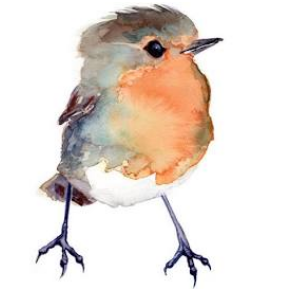
But the fourth lawyer, whose name was Abraham Lincoln, stopped. He got down from his horse and very gently took the little ones up in his big warm hands.

They did not seem frightened, but chirped softly, as if they knew they were safe.

"Never mind, my little fellows," said Mr. Lincoln "I will put you in your own cozy little bed."

Then he looked up to find the nest from which they had fallen. It was high, much higher than he could reach.

But Mr. Lincoln could climb. He had climbed many a tree when he was a boy. He put the birds softly, one by one, into their warm little home. Two other baby birds were there, that had not fallen out. All cuddled down together and were very happy.

Soon the three lawyers who had ridden ahead stopped at a spring to give their horses water.

"Where is Lincoln?" asked one.

All were surprised to find that he was not with them.

"Do you remember those birds?" said Mr. Speed. "Very likely he has stopped to take care of them."

In a few minutes Mr. Lincoln joined them. His shoes were covered with mud; he had torn his coat on the thorny tree.

"Hello, Abraham!" said Mr. Hardin. "Where have you been?"

"I stopped a minute to give those birds to their mother," he answered.

"Well, we always thought you were a hero," said Mr. Speed. "Now we know it."

Then all three of them laughed heartily. They thought it so foolish that a strong man should take so much trouble just for some worthless young birds.

"Gentlemen," said Mr. Lincoln, "I could not have slept to-night, if I had left those helpless little robins to perish in the wet grass."

Abraham Lincoln afterwards became very famous as a lawyer and statesman. He was elected president. Many people believe that he was one of the greatest American presidents. Those three lawyers who rode with Mr. Lincoln that day long ago certainly knew that he was kind in little ways. They also witnessed the blossoming of that kindness into greatness.

Saturday, February 19, 2022

Thursday, February 17, 2022

WORD PUZZLE


                                                                        WORD BANK